


After a US launch, the Inshallah team tested French-market acquisition with localized creative. This case compares a native French creator with a US creator’s AI-translated ad over the reported ten-day period. It shows one production and media test, not that AI translation will outperform native creation for every market.
Table of Contents
Strategic Approach to use AI to cross boarders
Realizing the importance of a strong plan, we chose to use user-generated content (UGC), which had already worked very well in other markets before. With the help of AI, we reused successful ads from previous campaigns in the US to smoothly introduce them to the French market. By using tools like ChatGPT and HeyGen, we were able to effectively translate and adjust the proven copies and actual video creatives.
Experimenting with AI Translated Creatives
In November, we initiated a comprehensive test within the French market on Facebook Ads. The ad set featured two distinct UGC creatives:
Ad#1 – Native French creator.
Ad#2 – Native US creator translated to French with AI.
Remarkably, approximately 75% of the total ad set spend was allocated to the AI-translated creative, with an additional 22% directed towards the native French UGC creative. Key metrics like CTR & CPC + CPI & ROAS, all favored our AI-translated creative.
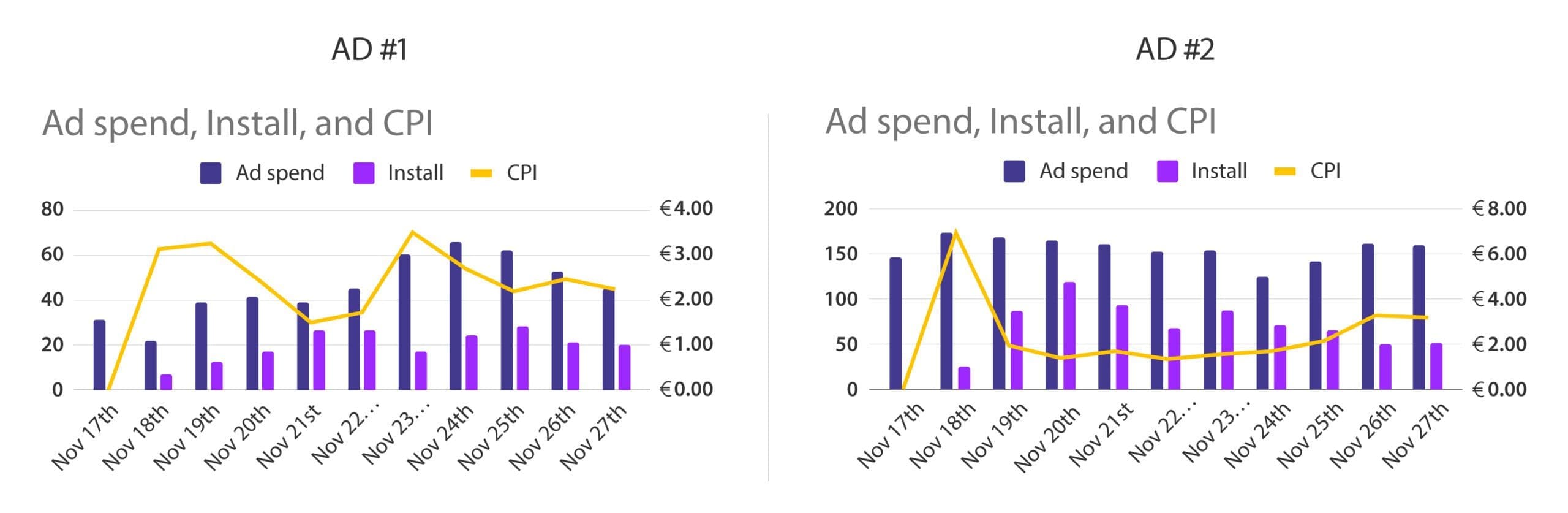
Head to Head (Testing period – 10 days):

Ad#1 – Native French creator.
- Ad spend: 23% over total ad spend.
- Installs: 25% over total installs.
- Cost Per Install (CPI): €2.52.
Ad#2 – Native US creator | AI translated to French.
- Ad spend: 77% over total ad spend.
- Installs: 75% over total installs.
- Cost Per Install (CPI): 15% cheaper than Ad#1.
The Process
Before translating a proven ad, confirm permission to reuse the footage, likeness and voice in the destination market and paid placements. Have a native speaker review the script, pronunciation, subtitles and product promise, then check the exported video at full resolution. The campaign outcome still needs its own test; a convincing translation is a production check, not a performance result.
The whole process from turning a single video originally recorded in EN to FR took 30 minutes. This is something that wouldn’t have been possible in the past since we should have either had a multilingual creator (probably quite expensive) or recorded the same script with the same art direction with a creator from each country. Both options seem a bit more complicated.
We used HeyGen – Video Translate. This platform has a tool that translates the content automatically and tries to clone the voice to make it sound similar to the original. It also makes the lip sync match audio and video as the footage was originally recorded in English.
The tool requires at least 30 seconds of footage so it can “learn” the voice, facial expressions, etc. It is easy to use, just drag and drop the video file and select the language you want to translate.
HeyGen currently supports a limited number of languages but the evolution of these type of tools leaves high hopes that it’ll eventually support more.
|
Current HeyGen Language Support |
|
| • Input: Arabic: 🇸🇦, Danish: 🇩🇰, Dutch: 🇳🇱, English: 🇺🇸/🇬🇧, Finnish: 🇫🇮, French: 🇫🇷, German: 🇩🇪, Hebrew: 🇮🇱, Hindi: 🇮🇳, Italian: 🇮🇹, Japanese: 🇯🇵, Korean: 🇰🇷, Mandarin: 🇨🇳, Polish: 🇵🇱, Portuguese: 🇵🇹/🇧🇷, Romanian: 🇷🇴, Russian: 🇷🇺, Spanish: 🇪🇸/🇲🇽/🇦🇷, Turkish: 🇹🇷. | • Output: English (American Accent): 🇺🇸, English (British Accent): 🇬🇧, Arabic: 🇸🇦, Bulgarian: 🇧🇬, Mandarin: 🇨🇳, Croatian: 🇭🇷, Czech: 🇨🇿, Danish: 🇩🇰, Dutch: 🇳🇱, Filipino: 🇵🇭, Finnish: 🇫🇮, French: 🇫🇷, German: 🇩🇪, Greek: 🇬🇷, Hindi: 🇮🇳, Indonesian: 🇮🇩, Italian: 🇮🇹, Japanese: 🇯🇵, Korean: 🇰🇷, Malay: 🇲🇾, Polish: 🇵🇱, Portuguese: 🇵🇹/🇧🇷, Romanian: 🇷🇴, Slovak: 🇸🇰, Spanish: 🇪🇸/🇲🇽/🇦🇷, Swedish: 🇸🇪, Tamil: 🇮🇳/🇱🇰, Turkish: 🇹🇷, Ukrainian: 🇺🇦. |
In addition to our innovative use of HeyGen for video translation, we strategically implemented ChatGPT to enhance the translation of textual content, further facilitating the localization process. By leveraging ChatGPT’s capabilities, we achieved a seamless and efficient adaptation of ad copies. The combination of these AI tools significantly contributed to the success of our French market launch, allowing us to navigate linguistic complexities with efficiency and agility.
Translation Prompts for ChatGPT
To effectively utilize a generative language model such as ChatGPT, it’s crucial to frame your request in a clear and precise manner, often referred to as a prompt. In our inquiry about performing translations with ChatGPT, the response was clear and to the point.
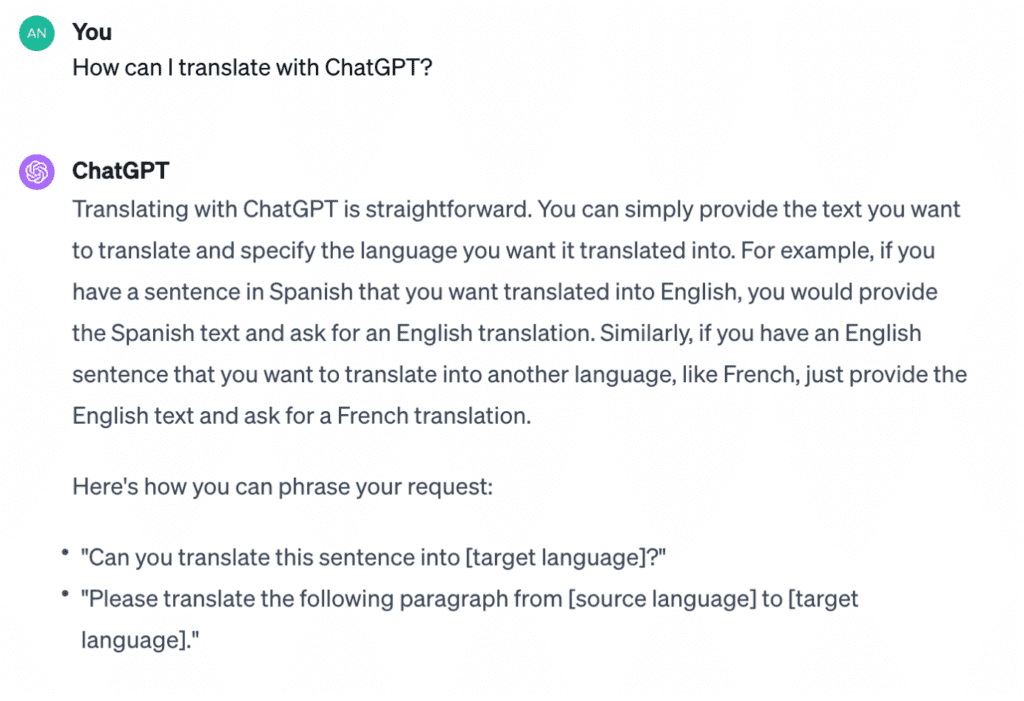
Some alternative ways to phrase translation requests:
- How do you say “What time is it?” in Spanish?
- Could you translate “Good morning” to Russian?
- I’d like to know how to say “Please” in Mandarin.
- What is the Korean translation for the word “friend”?
The results are pretty accurate for the languages we tried and proofread with the help of native speakers for each language.
The final product
Conclusion:
In this French-market test, the AI-translated version received more delivery and had the lower reported CPI. Unequal spend and a ten-day observation window limit what we can infer about the creative’s independent effect and longer-term user value. Use the Inshallah creative-translation case study for the campaign context, and judge a new localization test on both production quality and mature acquisition outcomes.