




 CRO case study
How one screen lifted TruPlay’s sign-ups by 13%
13% more parents created an account in a clean iOS A/B test.
- Client
- TruPlay, a faith-based kids’ games app
- Service
- Conversion rate optimization
- Test
- iOS A/B test, traffic split evenly
- Window
- Six days, September 2026
- Result
- +13% account creation
- Confidence
- 95%
Introduction
A big ask at a fragile moment
TruPlay, a faith-based kids’ app, works with Admiral Media on conversion rate optimization (CRO) across its app onboarding flow.
By sign-up, parents have shared their child’s age, screen-time worries and faith goals. Then the app asks for an email and password. It’s a big ask at a fragile moment, and we suspected it was costing sign-ups.


The challenge
Parents finished onboarding, then stopped at sign-up
Parents dropped at sign-up
Many parents who finished onboarding left at the sign-up step without creating an account.
A cold handoff
Parents had given a lot and got nothing back, so signing up felt like a cost rather than a next step.
One step to fix
We left the rest of the funnel alone and focused on this moment. To win parents over, sign-up had to feel worth it.
The strategy
We gave parents something back first
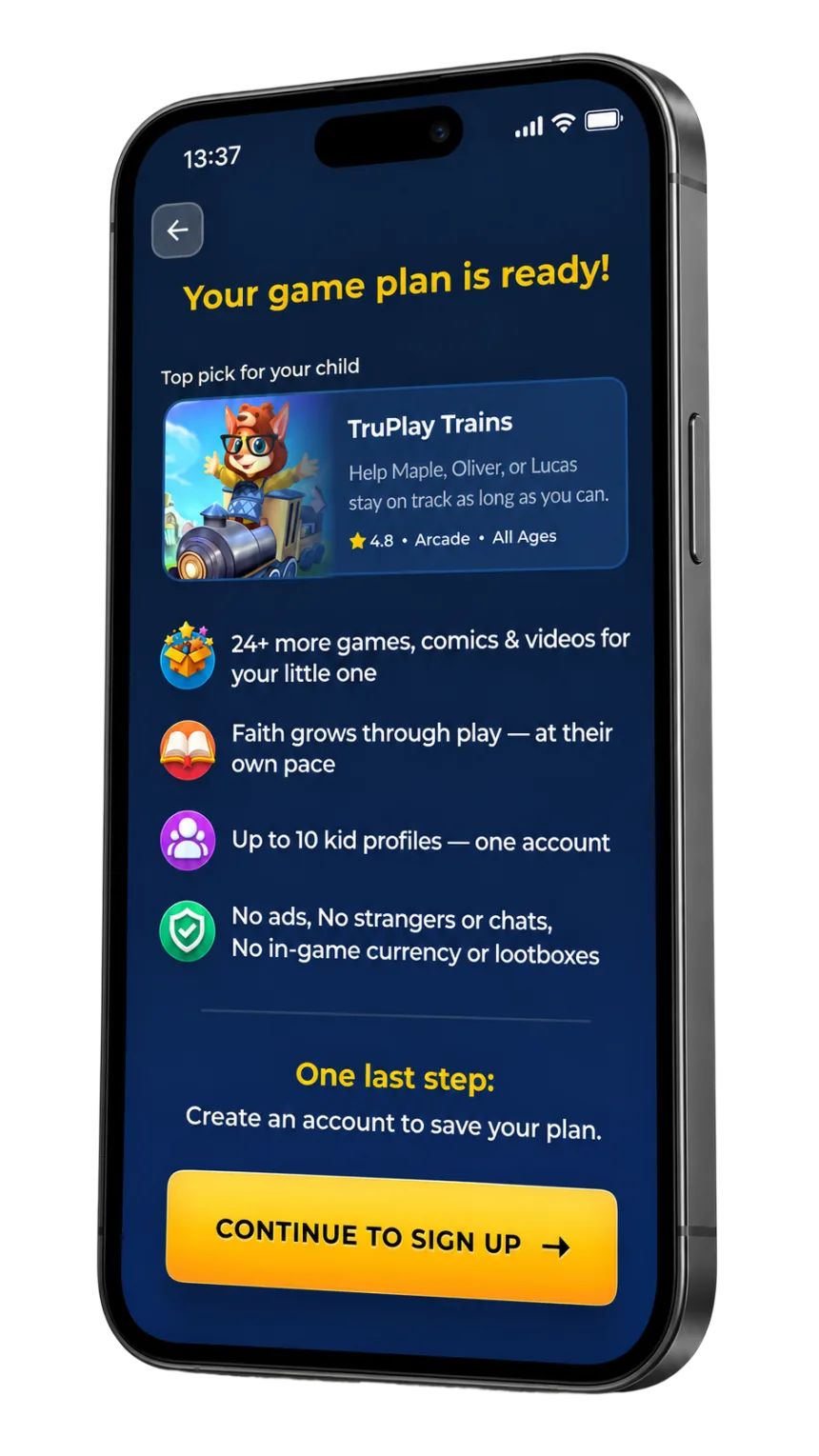
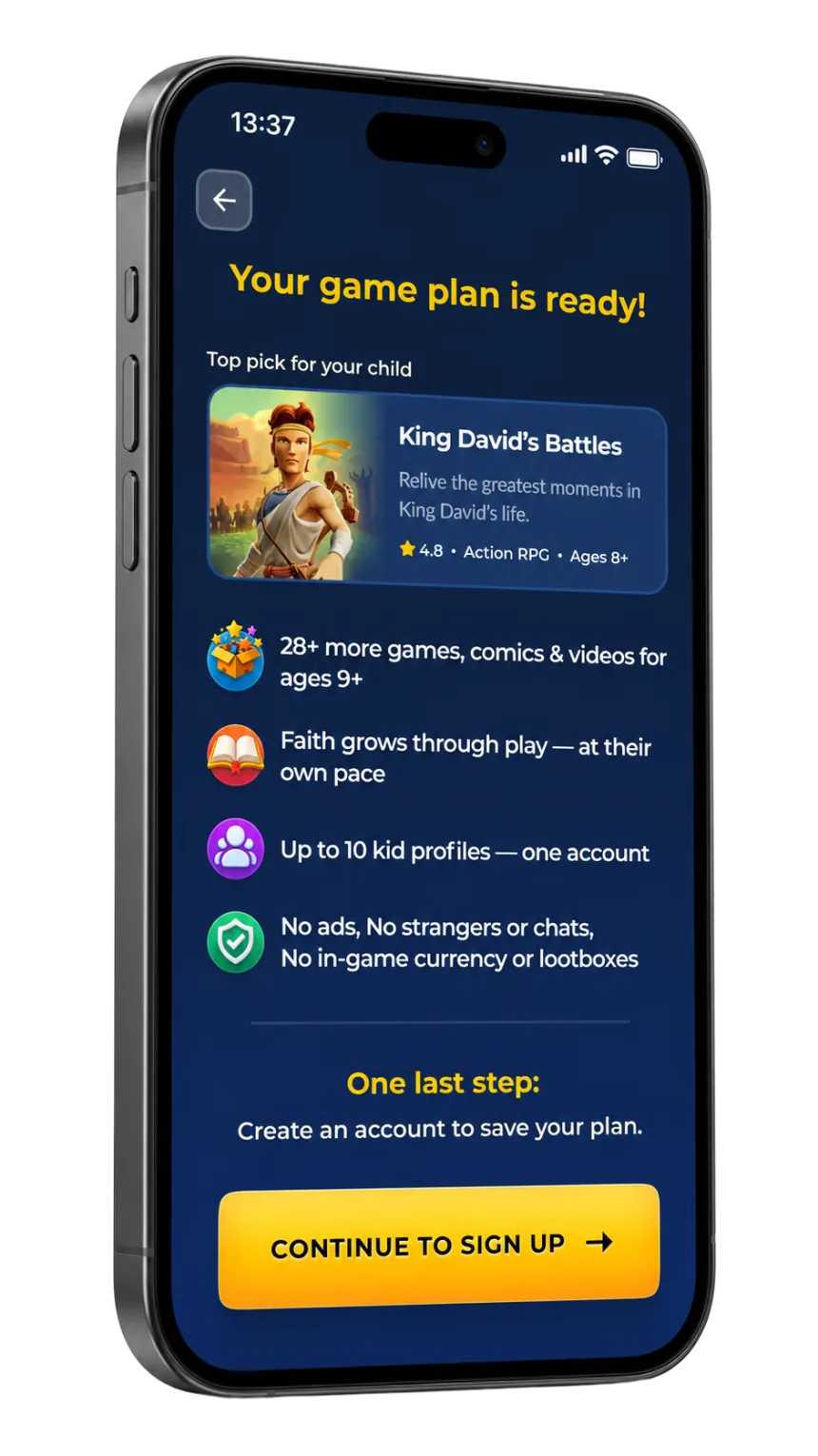
Instead of reworking the sign-up form, we gave parents something before asking for anything: one new screen, placed right before sign-up.
01A personalised game plan
“Your game plan is ready!”
showed one top pick, based on what parents said about their child’s age in the quiz: an arcade game for children up to 8, or a Bible-story action game for 9 and up.02Safety promises at the moment of commitment
Below the pick, the screen answered the worries parents had just shared: no ads, no strangers or chats, and no in-game currency or loot boxes.
03A reframed ask
With the plan and the promises in front of them, parents saw a new call to action:
“Create an account to save your plan.”
04A clean test
Only this screen changed. We ran it against the existing flow on iOS for six days, with traffic split evenly.
The impact
One new screen, 13% more sign-ups
The result held at 95% confidence in a clean iOS A/B test.
Account creation after onboarding
Parents who created an account after finishing onboarding, indexed to the existing flow (existing flow = 100).
| Flow | Account creation index |
|---|---|
| Existing flow | 100 |
| New flow with the game plan screen | 113 (13% more) |
Try this in your app
Three ideas to test in your onboarding
If your onboarding asks questions before sign-up, each of these is worth a test.
- 01
Give something first
Show users a result built from their onboarding answers before you ask them to sign up.
- 02
Answer worries at the decision point
Put your strongest reassurances on the screen where people decide, not on a page they’ve already passed.
- 03
Reframe the ask
Make sign-up about keeping something they already have, not starting something new.
When it may not fit: If your app has no onboarding quiz, there’s nothing personal to give back yet. In paywall-first apps, the paywall is the bigger decision point, so that’s the moment to test first.
What’s next
What TruPlay tests next
The next round of tests will show which part of the screen drove the lift, and whether the extra sign-ups turn into trials.


Key takeaway
Whatever those tests show, this one already points to a simple lesson. The biggest conversion wins often aren’t a new button. They’re a better moment. Our edge is the method: our data team finds the drop, forms a hypothesis, tests one change and learns what actually drove the result.
FAQ
Questions about this test
Short answers on what changed, what moved and how to run the same test in your app. More on our approach on the CRO service page.
What did TruPlay change to lift sign-ups?
One screen. Right before sign-up, parents now see “Your game plan is ready!”: one top game pick matched to their child’s age, the safety promises they care about, and a new ask, “Create an account to save your plan.” Nothing else in the flow changed.
How much did account creation improve?
13% more parents who finished onboarding created an account, compared with the existing flow. The iOS A/B test ran for six days with traffic split evenly, and the result held at 95% confidence.
Why do we think the new screen worked?
We think it worked because parents got something back before being asked for something. The plan made their quiz answers feel useful, the promises answered their worries at the moment of commitment, and the new ask framed sign-up as saving what they already had. The next tests will show which part mattered most.
Do the extra sign-ups start trials?
We are still checking. The next step is to see whether the added sign-ups start trials at the same rate as parents who signed up through the existing flow.
Will the same idea work in my app?
If your onboarding asks questions before sign-up, it is worth testing: give something back first, answer worries where people decide, and frame sign-up as keeping something. If your app has no quiz, or shows a paywall first, start testing at the paywall instead.
How does Admiral Media run a CRO test like this?
We map your funnel from onboarding to paywall, find the biggest drop, form a hypothesis and test one change at a time with an even A/B split. We keep only what moves the numbers.
Your funnel next
Turn your sign-up step into a warm handoff
From onboarding to paywall, we find the drop-offs and test what closes them.
We run focused A/B tests on your funnel and keep only what moves the numbers, so more of the users you’ve paid for become customers.
4.9 on Clutch from 48 reviews
Book a meeting
Takes about a minute. Fields marked with an asterisk (*) are required.