Admiral AI
Creative Factory
Get Fully Managed AI creative production.

Produced by AI, refined by experts.
150+ brands.
10,000+ AI ads delivered
Admiral AI
Creative Factory
Get Fully Managed AI creative production.
Produced by AI, refined by experts.
150+ Clients Satisfied
Industry Winners Work With Admiral
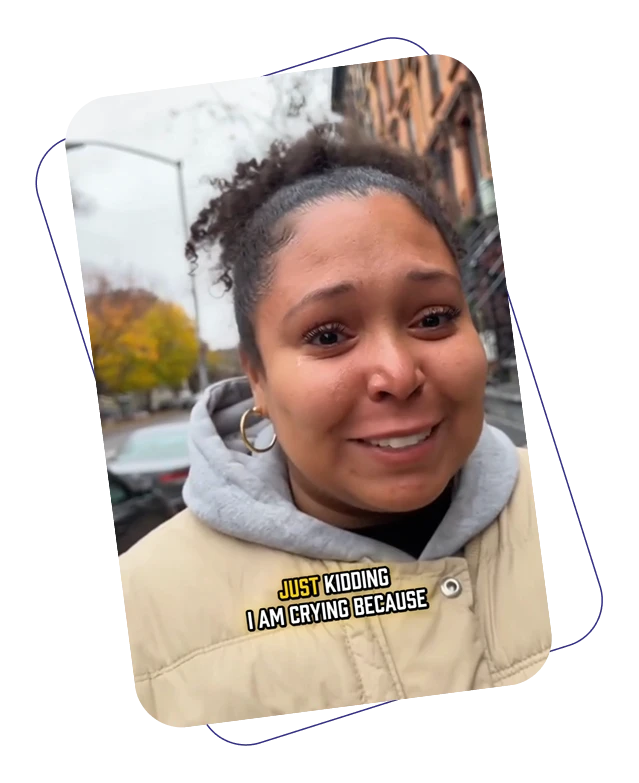
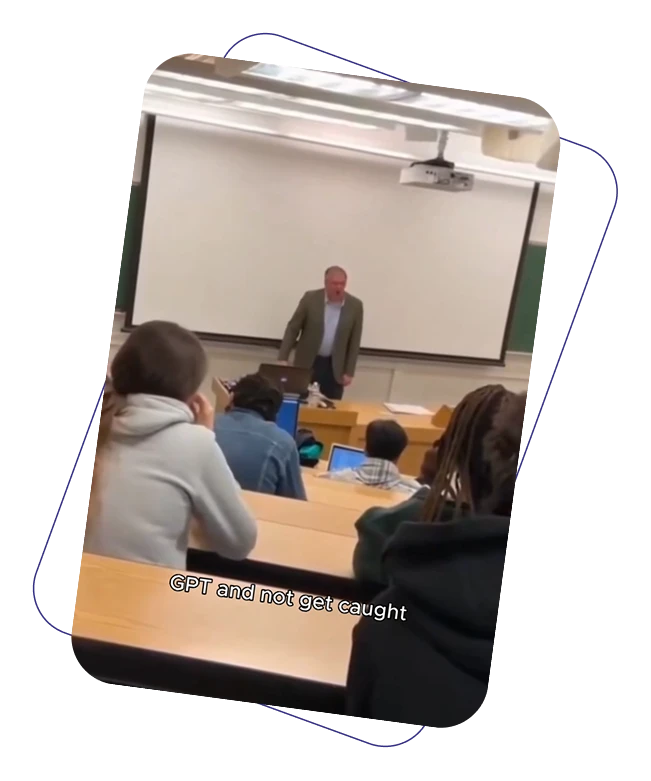
AI - almost unrecognizable
See examples of how we’ve turned briefs into hundreds of performance-
tested variants. So good, you’d never guess it’s 100% AI-generated.
Our Marketing Partners
Brief in. Ads out.
Fully managed. No back-and-forth. No surprises.
Request Demo →Creative strategy + AI production.
Our team builds the creative strategy. AI produces the videos. You get performance-ready ads at scale.
- 20 video ads per batch
- Concept + production included
- Dedicated Creative Strategist
- 40 video ads per batch
- Concept + production included
- Dedicated Creative Strategist
- Bi-weekly strategy calls
- Faster deliveries
- 80 video ads per batch
- Concept + production included
- Dedicated Creative Strategist
- Weekly strategy calls
- Faster deliveries
by our team
video production
& editing
Need a different volume or video length? Let's talk.
AI Creative Demo Workflow explained
Watch: New Concepts in 12 Minutes
- Uses briefs, competitor ads, or performance data as inputs.
- 100-150 variants generated quickly
- Outputs lots of variants fast so designers focus on polishing.
We Build Customized AI Creative Workflows
Built for Creative Velocity
The technology behind Admiral’s Al Factory
Ready to 10x Your
Creative Testing?
Common Questions About AI Creative Services
How does AI creative perform vs traditional UGC?
AI creative consistently outperforms traditional UGC in three critical areas: speed, scale, and strategic iteration. While traditional UGC takes 2-4 weeks per creator and limits you to their style, our AI setup generates +20 native-feeling variations, way faster.
Traditional UGC works. No doubt. But it can’t match the velocity needed to dominate competitive auction environments.
The real question isn’t AI vs. UGC. It’s whether you’re testing fast enough to win.
What counts as an "asset"?
Each asset is a finished, platform-ready video ad. This includes:
• AI-generated base video
• Professional editing (sound, transitions, effects)
• Subtitles and text overlays
• Your app/product footage inserted or mentioned
What's the difference between your service and DIY tools like HeyGen?
HeyGen and similar tools are powerful, but for now, they’re just tools. The difference is strategy, speed, and optimization.
DIY tools require your team to: write scripts, source avatars, test formats, learn each platform’s specs, analyze performance, and iterate based on data.
That’s 20-30 hours/week minimum, and most in-house teams still produce generic, off-brand content that doesn’t convert.
We handle the entire creative operation: strategy, production, platform optimization, performance analysis, and continuous iteration.
You get native-feeling creatives monthly, formatted for every platform, with built-in learnings from $500M+ in ad spend.
Think of it this way: you could buy video editing software, or you could hire an editor. DIY tools are the software. We’re the growth team.
Admiral is fully managed:
- We handle AI generation, editing, formatting
- You get finished ads, not raw AI outputs
- Human editors polish every video
- Platform optimization included
- Strategic guidance on what to test
DIY AI tools require you to: - Learn prompting
- Edit and polish yourself
- Export correct specs
- Figure out what works
We do all of that for you.
Do I need to provide anything besides a brief?
Just your brand assets (logo, colors, fonts) and any app footage you want included. We handle everything else.
Can I upgrade or downgrade anytime?
Yes. Upgrade immediately, downgrade at end of billing cycle. No contracts, cancel anytime with 30 days notice.
Most clients who start with us during a test phase end up 3-5X’ing their creative volume within 90 days because the results speak for themselves. We’re built to grow with you, not lock you in
Do you only do AI creative, or can you handle traditional UGC too?
We do both, and we’ll tell you which one your campaign actually needs.
AI creative is faster, cheaper, and better for high-volume testing (100+ variations/month). Traditional UGC is better for trust-building content, influencer partnerships, and highly personal storytelling.
Most high-growth apps use a hybrid approach: AI creative for paid acquisition and iteration, UGC for organic social. We manage both, so you’re never stuck in one lane.
The goal isn’t to use AI because it’s trendy, it’s to use whatever drives the lowest CPA and highest LTV
Scaling ad creative for Meta and TikTok
A larger creative order should make the next campaign decision clearer. Before choosing a production volume, define the questions you want the ads to answer: which customer problem matters, which product benefit earns attention, and which message brings people who continue beyond the click. That brief gives production and media teams a shared purpose.
Choose the responsibilities you need
A production brief specifies what needs to be made. An ongoing creative and media programme also needs someone to plan tests, launch campaigns, review results and decide what comes next. Admiral Media offers creative production and performance marketing management. When asking for a quote, identify which responsibilities you want us to handle and which remain with your team. Campaign management should be confirmed in the proposal rather than inferred from a video order.
Count concepts and variations separately
A concept is the underlying communication idea, such as showing how a product solves a particular problem. A variation changes the execution of that idea, such as its opening, presenter, caption or duration. Resizing an approved video for another placement is another deliverable, but it does not automatically introduce a new concept.
Ask for these counts separately. Specify the number of concepts, variations per concept, final video lengths, languages and placement formats. This helps everyone compare proposals on the work involved. It also makes it easier to see whether the next batch explores new ideas or develops an idea already being tested.
Connect each batch to a learning question
Agree the question, success measure and review conditions before launch. Record the creative version, audience, market, placement and dates alongside the result. A higher click rate may be useful, but it does not establish that the ad acquired better customers. Review downstream events where the available data supports them, and keep attribution limits visible.
After the review, decide whether to develop the concept, change its execution, gather more evidence or stop it. Document the reason so the next production brief can use what the team learned. Our published NeuroNation case describes categorising communication ideas and testing them across audiences and markets; it is an example of the method, not a forecast for another account.
What to clarify in your quotation
Share your brand guidelines, product footage, target markets and required formats. Ask the proposal to spell out the creative deliverables, revision allowance, approval steps, dependencies and delivery schedule. Confirm who supplies source material, who signs off claims and who uploads the finished ads.
For ongoing work, also agree the reporting owner, review cadence, response expectations and route for urgent issues. Confirm media spend, production fees and management fees separately, together with any rights or cancellation terms that apply. These details depend on the agreed scope; the number of files alone does not define the engagement.