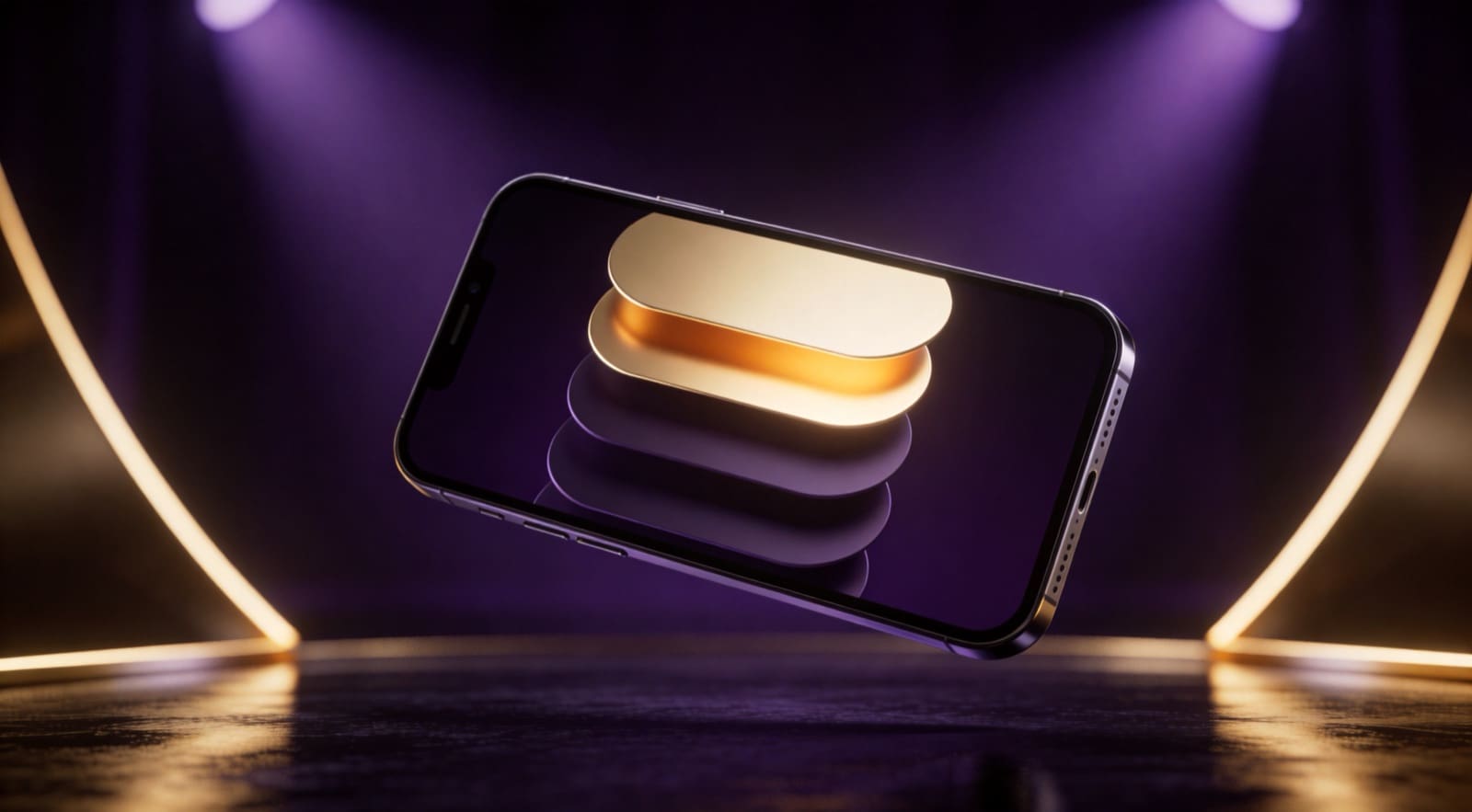

Short answer: Creative Assets are new App Store images and videos, announced at WWDC26, that appear in the product page header and in search results, including search in the Apple Games app. They can show your brand, a season or new content, not only the app in use. You manage them in a new Asset Library in App Store Connect, get them approved without an app update, use them on Custom Product Pages and test them with Product Page Optimization. Apple says they show on iOS 27 and iPadOS 27 and later, launching in fall 2026.
Table of Contents
What Apple announced
On June 8, 2026 Apple introduced Creative Assets as “rich images and videos that appear in the product page header and search results.” Apple says they work with Custom Product Pages and Product Page Optimization “so developers can test and learn what resonates best.”
Three workflow changes come with them:
- Asset Library: one place in App Store Connect for Creative Assets, app previews and screenshots, reusable across Custom Product Pages and In-App Events.
- Approval without an app update: submit assets alongside a new version, in the Asset Library or through the App Store Connect API. Apple’s WWDC26 App Store guide says you can get them approved in advance for a future product page update or Apple Ads campaign.
- Product page preview: see your header, description, screenshots and search asset on iPhone and iPad, across languages, in Dark Mode and in portrait or landscape before anything goes live.
Apple’s asset best practices state that Creative Assets appear “in iOS 27 and iPadOS 27 and later.” When we checked on September 29, 2026, Apple’s September developer update still marked header and search result assets “Coming soon,” with no date beyond fall 2026.
Specs: Apple has not yet published pixel dimensions, file formats, video length limits or asset counts for the header and search placements. It has published design templates for Figma, Photoshop, Pixelmator and Sketch. The only hard numbers so far are for ads: Apple’s Apple Ads help page requires a 3:2 aspect ratio, with videos of 5 to 30 seconds in search results ads only. Don’t assume the organic placements match until Apple says so.
Where Creative Assets appear
| Placement | What people see | What to plan for |
|---|---|---|
| Product page header | An image or video at the top of your page, above the screenshots | One clear idea for a first-time visitor |
| Search results (App Store and Apple Games app) | An image or video instead of your default screenshots | Purpose obvious at a glance, shown through real UI or gameplay. Without one, your In-App Events, previews and screenshots show |
| Featuring | Apple says assets also appear when your app is featured | Art strong enough for an editorial placement |
| Custom Product Pages | A header specific to that page | One header per audience or keyword theme |
| Apple Ads | Today tab and search results ads built from approved assets | 3:2 ad cuts, approved before the campaign |
For games, the Apple Games app matters twice. Its search can show your Creative Asset, and Apple is letting game developers showcase special offers there by using Featuring Nominations to propose an in-game offer or limited-time discount. In a WWDC26 lab session, Apple’s panel said the new product page assets “would also be used in your featuring placement.” One season’s art now serves the header, search, featuring and ads.
How they work with Custom Product Pages and Product Page Optimization
Apple lets you publish up to 70 Custom Product Pages and assign keywords to each one, so a page can appear in search for those keywords instead of your default page. With Creative Assets, each page can also get its own header. A page for “budget tracker” and one for “couples budgeting” can make different promises in the first second, not from the third screenshot on. Apple hasn’t said whether a keyword page’s own search asset shows for its keywords, so plan for it and confirm at launch.
Product Page Optimization runs up to three treatments against your original page on randomly split traffic for up to 90 days. Apple states that PPO is not available for Custom Product Pages, so test header concepts on your default page, then carry the winning direction into your keyword pages. As we explain in why Custom Product Pages are not A/B tests, comparing a keyword page with your default page compares two audiences, not two creatives.
From screenshots only to a creative system
Until now, your first impression in search was your first one to three screenshots or your app preview, and most listings don’t use even that fully. In our State of App Store Listings 2026 study of 1,000 top US apps, only 12.2% had an app preview video (games led at 28%), only 13.5% used all 10 screenshots and 23% showed fewer than 6 iPhone screenshots.
Creative Assets split the job. The header and search asset sell the idea; the screenshots prove the product. That multiplies the work: concepts times audiences, languages and seasons. Screenshots and previews still matter as the search fallback and the proof below the header, so run your listing through our ASO Checker to see what’s missing today.
What to prepare now
- A header concept per audience. Start with the first-time visitor on your default page, then each audience your Custom Product Pages serve: a use case, a feature, a season, lapsed users. Write each promise in one sentence before anyone opens a design file.
- A search asset per keyword intent. Group keywords by intent: brand, category (“habit tracker”), problem (“stop procrastinating”) and feature. Brand searchers know you, so lead with brand. Category and problem searchers are comparing, so show the app doing the job. Map each intent to a keyword page.
- A test plan. Pick your first PPO test now, such as a product-led header against a brand-led and a seasonal one. Change one thing per test and set the success metric and minimum run time up front.
- A production workflow. Brief, design on Apple’s templates, localize, check the rules, submit to the Asset Library, schedule. Get seasonal assets approved well before the date.
- A rules check. Apple points to Guideline 2.3, Accurate Metadata. No specific prices, discounts, URLs or copyright symbols, no awards you didn’t win, no Apple recognitions like Editor’s Choice and no references to other platforms. Every asset must meet a 4+ age rating, even if your app is rated higher.
Production tips
Use real product and real gameplay
Apple’s search guidance asks you to show the interface, content or gameplay. A cinematic frame that doesn’t match the app is an accuracy risk under Guideline 2.3 and a retention risk.
Design for small sizes
One idea per asset. If you use text, keep it to a short phrase that adds to the visual. Keep the focal point centered inside a safe area, because assets crop differently across devices and orientations. Check every asset in the preview tool on iPhone and iPad, in both orientations and in Dark Mode.
Make video work muted
Apple says audio is muted by default in most cases. Pick a strong poster frame, lead with the core value, avoid quick cuts and make the loop seamless, since videos autoplay and repeat.
Localize the idea, not only the text
Apple asks you to localize text for every language your app supports, and you can localize images and videos per country. A US holiday header won’t fit Japan or Brazil, so build the calendar per market.
Plan approval timing
Apple says approved assets can be used in the header and search results without additional reviews. Build a bank of approved assets ahead of launches and seasons.
Our AI Creative Factory produces store and ad creative variants per audience, keyword theme and language, and every asset gets a human check for accuracy and policy before submission.
Measurement
- PPO: Apple reports impressions, conversion rate, percent improvement and confidence level for each treatment. It’s your only randomized read.
- Custom Product Pages: App Analytics shows impressions, downloads, redownloads and conversion rate per page once it reaches five first-time downloads. Use it for trends, not winners.
- Before and after: a default page header change shares its timeline with seasonality, featuring and ad spend. Log every asset launch date.
- OS mix: assets only show on iOS 27 and iPadOS 27 and later, so early data covers part of your traffic. Apple hasn’t described asset-level reporting yet; check App Analytics at launch.
Pair store data with trial starts, day-7 retention and payer rate: a header that lifts downloads but brings the wrong users is not a win. Our App Store Optimization agency team runs this loop of strategy, production and testing for app and game teams.
Frequently asked questions
What are App Store Creative Assets?
Creative Assets are images and videos that appear in your App Store product page header and in search results, including search in the Apple Games app. Apple announced them at WWDC26 in June 2026. Unlike screenshots, they can show your brand, a seasonal offer or new content, not only the app in use.
When will Creative Assets be available, and on which devices?
Apple says Creative Assets appear on iOS 27 and iPadOS 27 and later, launching in fall 2026. On September 29, 2026, Apple’s developer pages still marked header and search result assets as “Coming soon” without a date. People on older OS versions keep seeing screenshots and app previews.
What sizes and video lengths do Creative Assets need?
Apple has not yet published dimensions, file formats, video length limits or asset counts for the organic header and search placements. It has published design templates for Figma, Photoshop, Pixelmator and Sketch. For Apple Ads, its help page requires a 3:2 aspect ratio and videos of 5 to 30 seconds, used in search results ads only.
Do Creative Assets need App Review or a new app version?
They need App Review approval, but not a new app version. You can submit them alongside an app version, in the Asset Library or through the App Store Connect API, and get them approved in advance. Apple says approved assets can then be used in the header and search results without additional reviews.
Can I A/B test a product page header?
Yes, with Product Page Optimization, which tests up to three treatments against your original page on randomly split traffic for up to 90 days. PPO only runs on your default product page, not on Custom Product Pages, so test header concepts there and roll the winning direction into your keyword pages.
Get your listing ready for Creative Assets
We map your audiences and keyword intents to header and search concepts, produce them with our AI Creative Factory and set up the tests that show which ones convert.
Book a meeting →